


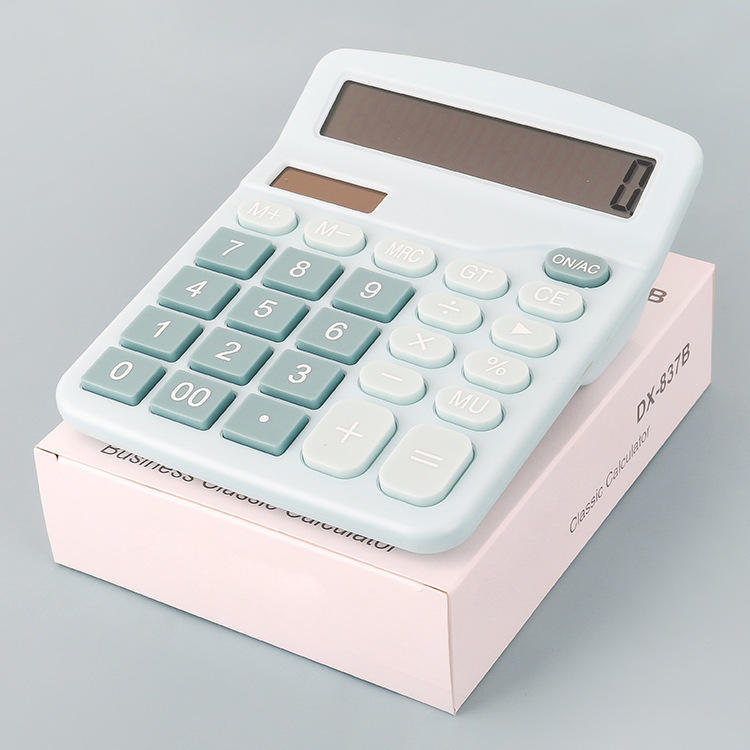
The future of calculators in 2025 and beyond is poised to be shaped by technological advancements, integration with other devices, and increased functionality. Here’s a look at what we can expect for calculators in the coming years:
1. AI-Powered Calculators
- What to Expect:
- Artificial Intelligence (AI) will likely play a huge role in enhancing the functionality of calculators. Imagine a calculator that doesn’t just solve equations but also understands the context of the problem and can offer step-by-step solutions, recommendations, or even explanations based on your learning progress.
- AI Assistance for Students: AI could guide students through complex problems by identifying common mistakes, offering hints, and explaining concepts in multiple ways.
- Real-Time Problem Solving: AI-powered calculators could adjust their solutions based on input from users, offer alternative approaches to problems, and even customize the way they present solutions based on the user’s learning style.
2. Integration with Cloud and Data Storage
- What to Expect:
- Cloud Connectivity: Future calculators may seamlessly sync with cloud services, allowing for real-time updates and the ability to save and access calculations from anywhere.
- Collaborative Features: Students or professionals could collaborate on complex problems, sharing results and notes instantly through cloud-based calculators.
- Access to External Databases: Future models could connect to online resources (like research databases, formula repositories, or scientific calculators used in specialized fields) to retrieve complex formulas and solve problems in real time.
3. Augmented Reality (AR) Integration
- What to Expect:
- Augmented Reality could transform how we interact with calculators, especially in educational contexts. Imagine using your phone, tablet, or AR glasses to point at a mathematical problem or physical object, and the calculator instantly provides a solution or analysis through an overlay of virtual information.
- Visualization of Complex Data: For higher education or professional fields (like engineering or physics), AR calculators could offer interactive graphs, 3D models, or simulations, making abstract concepts much more tangible.
4. Advanced Graphing and Visualization Tools
- What to Expect:
- More Powerful Graphing Calculators: Graphing calculators of the future could go beyond simple 2D and 3D graphing to include interactive visualizations, dynamic simulations, and real-time adjustments to variables. This could be especially useful in fields like physics, economics, or engineering, where data visualization plays a key role.
- Dynamic Graphing with AI: In the future, graphing calculators could automatically suggest different perspectives on a problem. For instance, based on a graph, the AI might suggest what happens if a specific variable is changed or ask the user to consider a different mathematical model.
5. Enhanced User Interfaces and Design
- What to Expect:
- Voice-Activated Calculators: Instead of pressing buttons, you could speak directly to your calculator, making the process faster and more intuitive. This voice input could be integrated with virtual assistants like Google Assistant, Siri, or Alexa.
- Touchscreen and Gesture Controls: As more calculators transition to smartphones or tablets, advanced touchscreens will provide better navigation, multi-touch gestures, and interactive interfaces for complex calculations.
- Haptic Feedback: Advanced tactile feedback might be integrated, allowing users to “feel” through vibrations when specific tasks or results are completed.
6. Calculator Apps and Customization
- What to Expect:
- Customizable Apps: Software-based calculators will be even more customizable in the future, allowing users to download specific features for their field of study (e.g., engineering, biology, economics) and adapt the layout and functions according to their preferences.
- Multifunctional Devices: The future could bring calculators as apps on smartphones, tablets, or even smartwatches, offering multi-functionality and deeper integration into personal or professional workflows. You won’t need a separate device—just an all-in-one solution in your pocket.
7. Integration with IoT (Internet of Things)
- What to Expect:
- Smart Calculators: As part of the Internet of Things (IoT), future calculators might connect to other devices or sensors (e.g., laboratory equipment, smart whiteboards, or scientific instruments). These calculators could take data from sensors and instantly perform complex calculations or offer insights on the data.
- Real-Time Data Processing: In fields like engineering or medicine, calculators could process data gathered from real-time measurements (e.g., from sensors) and calculate solutions, instantly displaying results on a device or screen.
8. More Focus on Sustainability
- What to Expect:
- As sustainability becomes a bigger global priority, eco-friendly calculators (solar-powered or made from recycled materials) are likely to become even more common.
- Future models may be designed to consume less energy and have a longer battery life, ensuring minimal environmental impact.
9. Integration with Blockchain and Cryptography
- What to Expect:
- Security and Privacy: With increasing concerns about data security, calculators may adopt blockchain technology for secure data storage, particularly in fields like finance, cryptography, and advanced research.
- Crypto-Calculators: Specialized calculators may emerge for fields like cryptocurrency analysis or financial modeling, directly integrating with blockchain for real-time calculations involving crypto prices, mining statistics, or investments.
10. Specialized Calculators for Emerging Fields
- What to Expect:
- As new fields of study emerge (e.g., quantum computing, machine learning, cryptoeconomics), we’ll see the development of specialized calculators designed to handle the unique equations and computations required in these areas.
- For example, a quantum computing calculator could calculate probabilities, qubit behaviors, and more, using quantum algorithms that current calculators are not equipped to handle.
Conclusion:
The future of calculators is not just about solving equations; it’s about creating smarter, more intuitive tools that work with you, adapt to your needs, and push the boundaries of what we can achieve with mathematics and science. Whether it’s AI-powered assistance, cloud integration, or augmented reality visualization, calculators will become an even more essential part of education, research, and professional work. The future is incredibly exciting, and we’re just scratching the surface of what’s possible!